


Start with the pull, not a tank ranking
Blizzard’s panel puts deliberate target choice at the center of dungeon combat.
Control can separate enemies when a tank cannot safely handle the whole group.
Damage dealers must watch threat, focus targets and use area damage only when safe.
This guide turns those principles into party preparation, based on official material.
It is not a report of our own beta play.
Threat reduction lowers threat; a taunt makes an enemy attack the tank.
Crowd control manages enemies, while a shield absorbs damage.
These are separate jobs, even when they help solve the same difficult pull.
Control assignments: baseline tools and talents
Sap no longer breaks the Rogue’s Stealth; that benefit is baseline.
Hunters can use traps in combat, but still place them at their own location.
The baseline trap cooldown is 30 seconds, with separate Frost and Fire cooldowns.
A Survival talent can reduce that cooldown; do not assume every Hunter has it.
The October 15 notes fix having 1 active Fire trap and 1 active Ice trap together.
Druids can cast Entangling Roots indoors as a baseline change.
Overgrowth is a talent that allows up to 3 rooted targets at once.
Improved Entangling Roots adds damage and lowers early-break chance from other damage.
Those extra root effects require talents; indoor use does not.
| Assignment | Baseline tool | Talent or position check |
|---|---|---|
| Rogue control | Sap preserves Stealth | Agree on the assigned enemy |
| Hunter control | Combat traps; 30-second baseline | Own location; cooldown reduction needs a talent |
| Druid control | Entangling Roots indoors | Overgrowth: up to 3; improved roots alter damage and break chance |
The official Balance-tree crop illustrates where talents are separate choices.
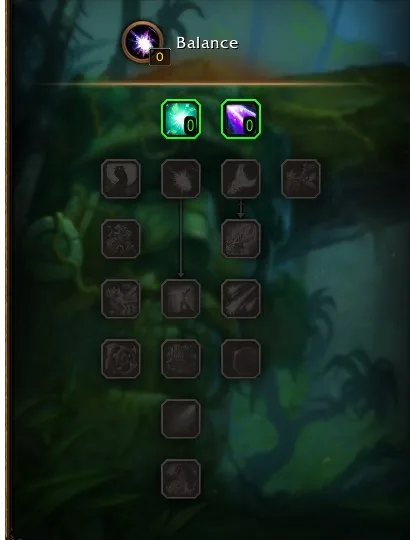
Its icons are not evidence for individual spell values.
Threat reduction belongs to more than the tank
The class articles double the threat reduction of Rogue Feint and Priest Fade.
Hunter Disengage was also intended to receive doubled threat reduction.
The October 8 development notes say that missed change was then implemented.
Our preparation suggestion: each player identifies their available threat tool.
Do not treat using it as a taunt or as control of an extra enemy.
Tank and healer checks: equipment, range and shields
Warrior Defiance needs a shield equipped to increase threat in Defensive Stance.
Defiance’s shield requirement is stated in Blizzard’s written class description.
A Paladin’s Seal of Fury makes its Judgement taunt the target.
That taunt has a 10-yard range; Warrior Taunt and Druid Growl have a 5-yard range.
Consecration deals moderate damage to the first 4 enemies entering it.
Other enemies take very low damage; it is not a hard limit on enemies damaged.
The class article frames this as reliable threat generation on only 4 targets.
Warrior Rage from taking damage ignores damage absorption effects.
Blizzard therefore says Power Word: Shield no longer reduces that Rage gain.
The October 8 notes also fix absorbs being handled incorrectly in that calculation.
This concerns Rage from incoming damage; it is not a promise about every Rage source.
| Role | Tool | Check before the pull |
|---|---|---|
| Warrior tank | Defiance talent | Shield equipped; Defensive Stance |
| Paladin tank | Seal of Fury + Judgement | 10-yard taunt; Warrior/Druid taunts: 5 yards |
| Paladin tank | Consecration | First 4: moderate damage; others: very low |
| Priest + Warrior | Power Word: Shield | Absorbs do not lower Rage gained from incoming damage |
Salvation: check who has it and who should keep it
The October 15 notes replace old Salvation blessings with Salvation and Mass Salvation.
They are applied in the same manner as those blessings and can coexist with blessings.
The class article describes Mass Salvation as the raid version targeting an entire class.
Paladins learn Revoke when they learn Salvation.
Revoke removes Salvation or Mass Salvation from a target party or raid member.
Our suggestion: agree on recipients, then check each tank’s intended Salvation status.
Do not copy the class article’s older “future beta build” warning as current status.
The dated implementation notes take priority here; no reduction percentage is assumed.
Four situations to discuss with your party
These are editorial preparation suggestions, not Blizzard’s optimal tactics.
With a control assignment, name the controlled enemy and the shared focus target.
With an extra enemy, check who it is attacking before choosing a response.
Ask the tank about an available taunt and the controller about an available tool.
With a Priest and Warrior, do not reject a shield merely to preserve damage-taken Rage.
With Salvation, check the actual recipient and arrange Revoke when appropriate.
| Situation | Party question | Avoid assuming |
|---|---|---|
| Control assigned | Which enemy is held apart? | That all area damage is safe |
| Extra enemy | Who is it attacking, and which tool is available? | That threat reduction is a taunt |
| Priest + Warrior | What protection does the tank need? | That absorbs reduce damage-taken Rage |
| Salvation | Who should have it now? | That a class-wide application fits every recipient |
A preparation flow to reuse
Our suggested flow has 4 checks, rather than a fixed combat rotation.
Agree on roles and the focus target before starting.
Choose the enemies to separate and confirm positions and talents.
Check the enemy’s target and each role’s available threat tool.
Respond to the situation, then confirm control and Salvation recipients again.
Party preparation
- Agree on rolesName tank, control assignments and focus target.
- Separate enemiesCheck tool, position and required talents.
- Check threatConfirm targets and available threat tools.
- Respond and recheckReassess control and Salvation recipients.
Scope and full class references
Checked October 19, 2026: Forever beta, without assigning a client build number.
Dates on development notes identify the update, not a converted local release time.
These sources do not establish an optimal party, threat formula or damage threshold.
We add no unverified control targets, durations, cooldowns or immunity rules.
Use the full class guides for the wider changes and talent context.